If you discover an error after filing your return, you may need to amend your return. The IRS may correct mathematical or clerical errors on a return and may accept returns without certain required forms or schedules. 
In these instances, there’s no need to amend your return. However, do file an amended return if there’s a change in your filing status, income, deductions, or credits. Use Form 1040X (PDF), Amended U.S. Individual Income Tax Return, to correct a previously filed Form 1040 (PDF), Form 1040A (PDF), Form 1040EZ (PDF), Form 1040NR (PDF), Form 1040NR-EZ (PDF), or to change amounts previously adjusted by the IRS.
You can also use Form 1040X to make a claim for a carryback due to a loss or unused credit; however, you may also be able to use Form 1045 (PDF), Application for Tentative Refund, instead of Form 1040X. Also, if the Form 8938 (PDF), Statement of Specified Foreign Financial Assets, applies to you, file it with an annual return or an amended return. See the Form 8938 Instructions for more information.
Learn more about income tax planning from the Zinner & Co. tax team

Do You Have an HSA? What you need to know about the 2018 limits
The 2018 health savings account (HSA) guidelines were recently released by the Internal Revenue Service (IRS). These guidelines outline the inflation-adjusted contribution, deductible, and out-of-pocket spending limits for Health Savings Accounts (HSAs) and high-deductible health plans (HDHPs) for calendar year 2018. 
Patience is a Virtue: Why you need to (still!) wait to receive your tax refund
For the taxpayers who went through the painstaking process of sifting through their shoebox full of receipts in the attempt to file their income tax return early, we have to offer you a gentle and friendly reminder that refunds stemming from returns claiming the Earned Income Tax Credit or the Additional Child Tax credit will be delayed until February 15.
Pay Me Now, Pay Me Later: Should you pay quarterly estimates or utilize tax withholdings?
Many clients ask if it is more advantageous to pay quarterly tax estimates or utilize their tax withholding. I wish there were a simple, cookie-cutter answer. However, as no two taxpayers are alike, the same goes for the manner in which one can pay one’s taxes.
Both methods of paying income tax have their pros and cons. The best selection depends on your personal preference and, more so, financial situation. A majority of self-employed individuals must utilize quarterly payments. However, if you have an income source such as retirement distributions, social security or employee wages, you have the option of withholding tax from those income streams in lieu of paying quarterly. read more…
Tax breaks to look out for
Why Your Bag of Used Clothing Isn’t Worth $1,000: The 2016 Noncash Charitable Contribution Fair Market Value Guide
Like many taxpayers, you may have recently (or routinely) donated a few bags of clothing and household items to a 501(c)(3) charitable organization.
The $125 designer jeans, a box of barely-used stuffed animals, and eclectic wall art were sought-after purchases that found their way to your home through your hard-earned dollars. Certainly, your goods were priceless treasures to you and you presumed the same for the lucky charity to which you would donate them.

Why You Will Not Receive a Tax Refund Before February 15
On December 18, 2015, President Obama signed legislation called “Protecting Americans from Tax Hikes” Act of 2015, or the PATH Act for short. 
The PATH Act contained many extensions and changes to existing tax laws. The Act also included a provision which will delay refunds for certain taxpayers. The IRS is now required to not issue a refund to anyone claiming the Earned Income Tax Credit or the Additional Child Tax Credit until February 15. Both of these refunds are considered “refundable credits,” which are essentially treated as additional tax payments, and can reduce one’s tax liability below zero. More, the PATH Act was enacted to give the IRS more time to review refund claims, in an effort to reduce fraud and catch refunds that may be improperly issued.
Do you have questions about the PATH Act, your refund, or income tax preparation? Let’s talk! Contact me at btheofilos@zinnerco.com or any of the professionals here at 216.831.0733. We’re ready to start the conversation and end the confusion.
Tax Return Planning Guide: Download Your Free Ebook
|
It’s that time of year again when most are thinking about filling out their tax return. Many are sifting through shoeboxes full of receipts, others, wondering if they have a receipt. |
6 Things to Keep in Mind if You Receive a Notice from the IRS
For some, a simple flip through the day’s mail can soon turn into a panic-producing event. Bad news, bill collectors, or worse, a tax notice from the IRS, state department of taxation, or the local tax agency.
read more…
IRS Lowers Mileage Rates for 2017
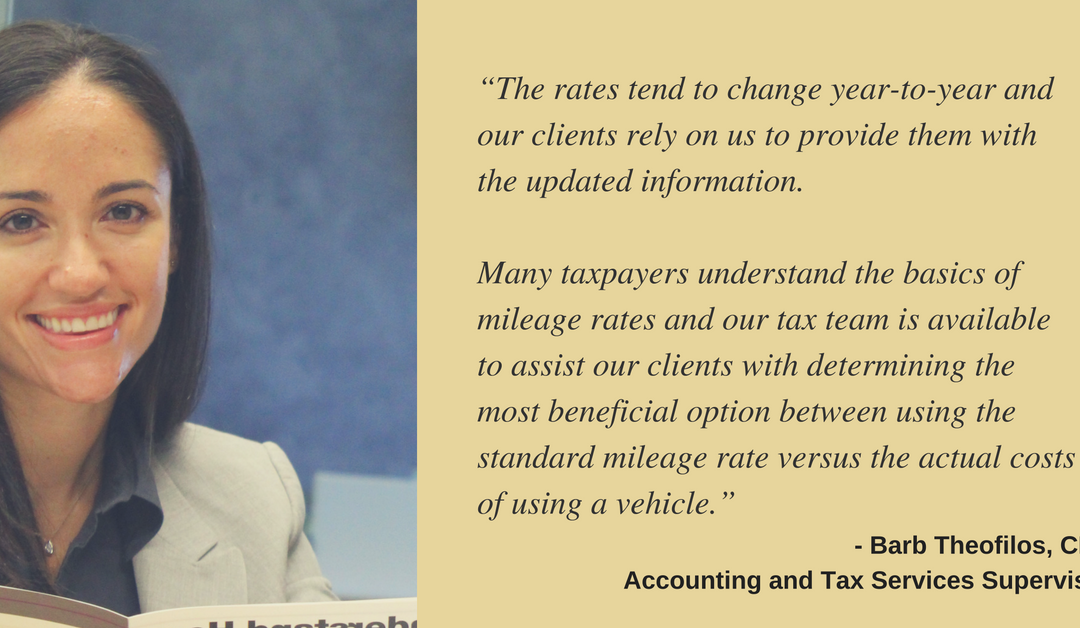
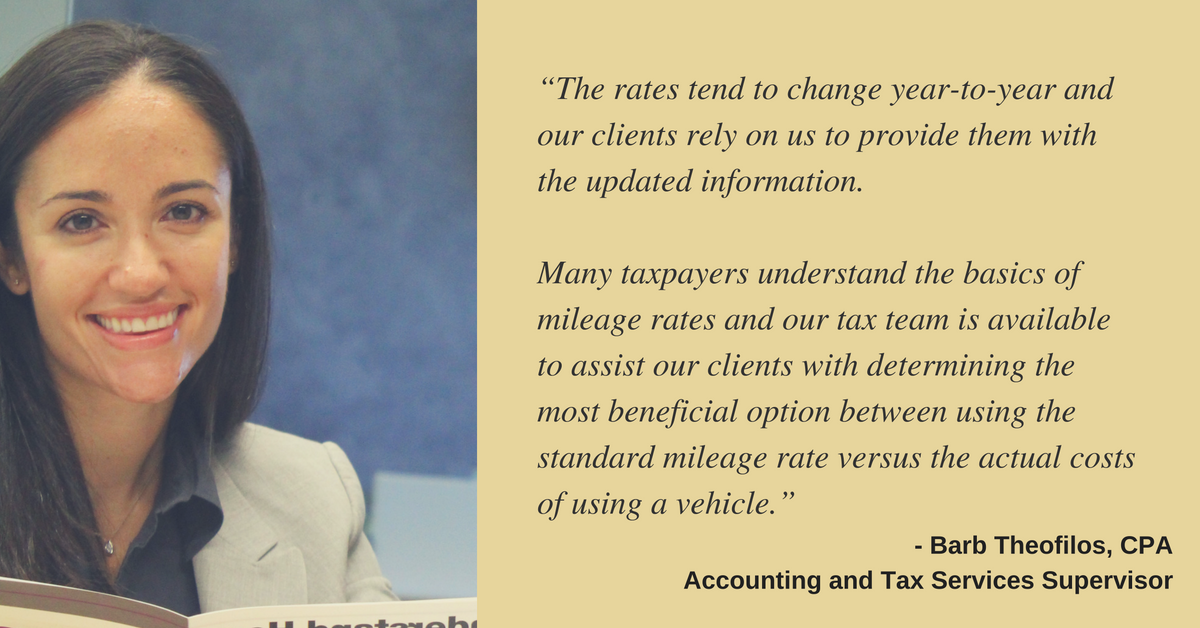
The Internal Revenue Service has issued the 2017 optional standard mileage rates to calculate the deductible costs of operating an automobile for business, charitable, medical or moving purposes. 
IRS Establishes Safe Harbor for Real Estate Rental Businesses
The IRS recently provided guidance to real estate investors regarding the Qualified Business Income (QBI) deduction under the Tax Cuts and Jobs Act (TCJA.) One of the weaknesses of the QBI provision of the TCJA was a lack of clarity in section 199A, which allows some...
5 Reasons You Shouldn’t Do Your Own Taxes This Year
Every year, a group of adventurous souls decides: This is the year I’m going to prepare my own tax return! While we certainly applaud an individual’s right to establish self-reliance and try to save money on preparation fees, it’s rarely a good idea. Just as you...
6 Important Things to Know About Divorce and Taxes
The sad reality is more than 50% of marriages end in divorce. The median duration of a marriage in the United States is 11 years. Divorce is a reality and there are some important things you need to know from a financial and tax perspective. Recent changes to the U.S....
Updated: 7 Important Tax Benefits of Real Estate Investing
Investing in real estate is a great way to develop wealth and improve your cash flow. In addition to the benefits of receiving monthly rental income, you can also potentially realize some significant tax benefits. As real estate investor and author Robert Kiyosaki...
National Taxpayer Advocate, Nina Olson, Set to Retire
National Taxpayer Advocate (NAS) Nina Olson, who is scheduled to retire on July 31st, 2019, addressed Congress for the 37th and presumably last time in her role. Olson, who has held the role of NAS for 18 years, addressed Congress to review the 2019 tax season and the...
Send us your questions and we’ll share our insights with you on our blog!