HURRY! Reserve your seat today!
read more…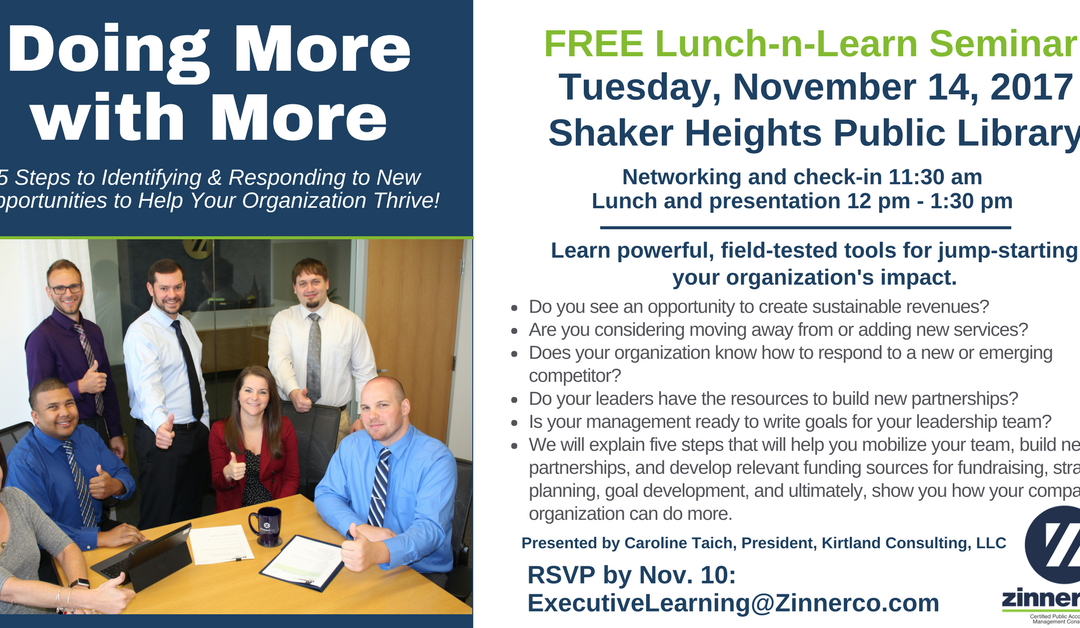

HURRY! Reserve your seat today!
read more…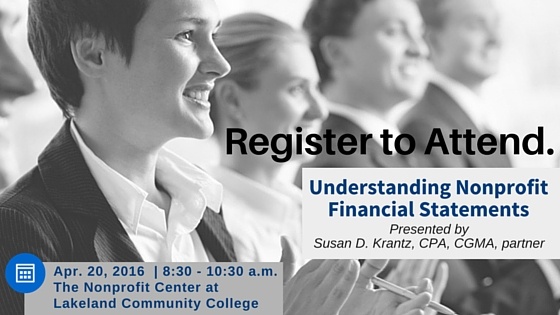
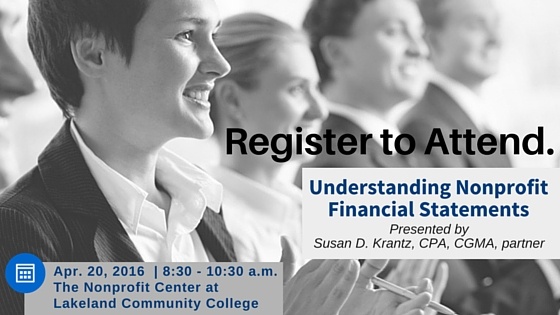 This important program will not only help non-accountants learn to make sense of financial statements but will also help those in the accounting field understand how nonprofit accounting is different.


On Jan. 1, the One Big Beautiful Bill Act (OBBBA) significantly tightened the rules on the tax deductibility of employer-provided meals. If your business has historically relied on deductions for meals and food-related benefits, these changes require immediate...
U.S. Customs and Border Protection (CBP) has launched the Consolidated Administration and Processing of Entries (CAPE) tool to help importers and customs brokers claim tariff refunds following a landmark Supreme Court ruling. If your business paid IEEPA tariffs in...
Trump Accounts are a new type of tax-advantaged retirement account for minors, established under the One Big Beautiful Bill signed into law on July 4, 2025. With contributions of up to $5,000 per year and a potential $1,000 government seed contribution for eligible...
What Employers and Workers Should Know The U.S. Department of Labor’s Wage and Hour Division announced a proposed rule intended to clarify when a worker is an employee and when the worker may be classified as an independent contractor under the Fair Labor Standards...
A Tax Filing Risk Alert for Taxpayers For decades, many taxpayers have relied on a simple rule of thumb: if it is in the mail by the deadline, you are fine. However, recent U.S. Postal Service (USPS) clarification makes that assumption riskier. On Dec. 24, 2025, the...

Send us your questions and we’ll share our insights with you on our blog!